


Steve Jobs died on October 5, 2011. The Apple Board of Directors confirmed the date in a statement that remembered his energy and inventions, but a life like his is bigger than a company announcement. Jobs helped make technology feel like a place where art, curiosity, and careful human choices could meet.
That meeting point is the constructive part of his story. Jobs did not invent every component inside the products associated with him, and he did not work alone. His gift was often one of combination: bringing engineers, designers, writers, artists, and builders toward a shared idea of what a tool could feel like in a person’s hands.
The beauty of the useful
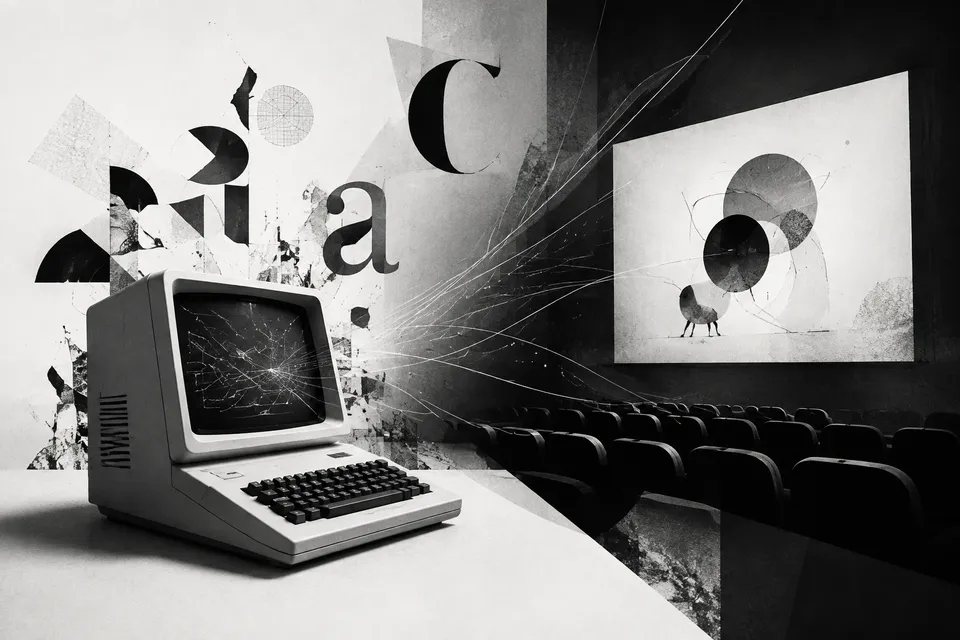
In his 2005 Stanford commencement address, Jobs described dropping into a calligraphy class after leaving college. He later connected that study of letterforms and spacing to the Macintosh’s typography. The lesson was not that every detour becomes a success story. It was that attention to beauty can change the usefulness of an everyday object.
In his account, the Macintosh brought multiple typefaces and proportionally spaced fonts into personal computing, a change he linked to his calligraphy study. Jobs’s own account gives the story its proper shape: curiosity came first, and the practical consequence appeared years later. That is a generous idea for anyone making things, especially when the payoff is not visible yet.
A second act in animation
Jobs also gave an independent future to the computer-graphics group that became Pixar. Pixar’s own history records that he purchased the division from George Lucas in 1986 and established it as an independent company. The eventual result was not a one-person achievement. It was a studio where technical research, character animation, writing, direction, and production could become one shared language.
Pixar’s history identifies Toy Story as the world’s first computer-animated feature film. The milestone matters because it shows what can happen when a new tool is placed in service of storytelling rather than treated as an end in itself. Jobs’s documented role was to purchase the group from George Lucas and establish it as an independent company; Toy Story was made by a team of artists and technologists.
The work after the name
The Steve Jobs Archive presents his work as a connection between the arts and technology and says its exhibits and publications draw on a private collection to bring those ideas to new generations. Its public account emphasizes revision, attention to detail, asking for advice, and the belief that people deserve excellence and beauty from the tools they use.
His leadership was not universally humane: Stanford Graduate School of Business reporting described Jobs as a hardball manager, an important counterweight to the praise in this feature. This account does not claim that one person created Apple or Pixar. It focuses on a documented contribution that can be shared: he helped gather ambitious people around tools that let other people create, communicate, and imagine differently.
The lasting invitation is simple. Make the tool more humane. Take beauty seriously. Follow the strange class, the side project, or the unfinished idea far enough to see what it might connect. Steve Jobs left behind products and companies, but also a vocabulary for believing that craft can widen the world.
Reader responses