

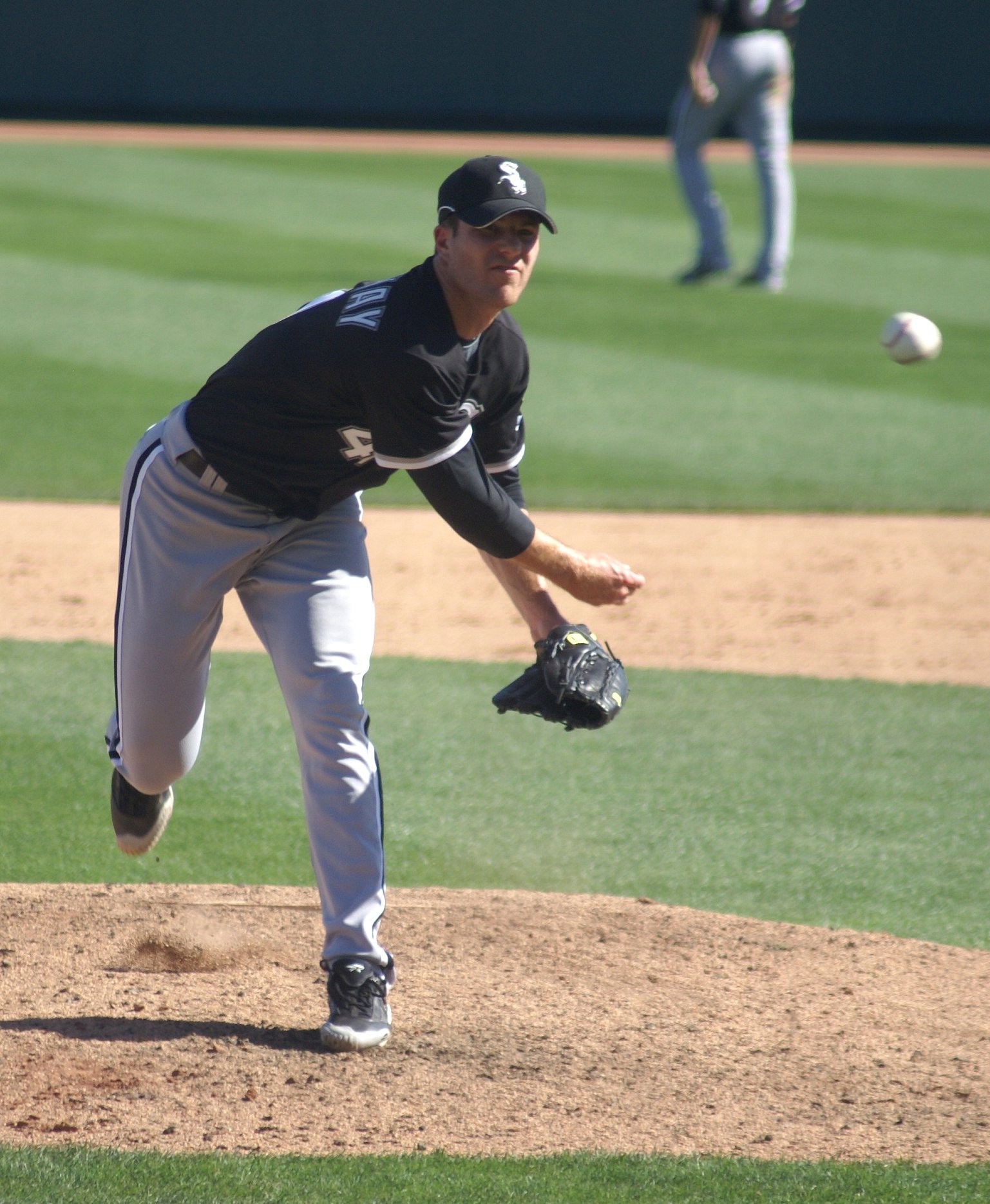
For the families of Canes Southwest, the measure of Lance Broadway's commitment was often a game their own team wasn't playing. The former big-league pitcher went to see his players on their high school teams, kept up with their numbers and called to talk about what had happened on the field. He had no duty to attend those games. That was exactly why the families remembered that he did. Broadway died Nov. 17 at 43, according to the Associated Press. After his years in professional baseball and on film sets, he had spent five years coaching with the youth club.
Before that, there were plenty of numbers to remember from his own games. Broadway pitched for Dallas Baptist and Texas Christian University. At TCU in 2005, he won 15 games, struck out 151 batters in 117 innings and earned Conference USA Pitcher of the Year honors. He made 16 starts in 19 appearances. That season put him in the running for national college baseball awards and made the right-hander the 15th player chosen in the major-league draft. The Chicago White Sox picked him in the first round. TCU, announcing the selection in June 2005, called it the highest draft position for one of its baseball players at the time.
The same TCU record gives a sense of how he worked through a season, not just how he finished it. One stretch of more than 36 innings passed without an earned run. It crossed six starts and one game in relief, rather than coming in one uninterrupted run as a starter. He struck out 52 batters during that run, which covered seven appearances. The school credited him with five complete games that season. In a college career that had already taken him from one program to another, one exceptional year opened the door to the next job.
Broadway appeared in 27 major-league games between 2007 and 2009 for the White Sox and the New York Mets. Those games established one part of his public life, but he did not spend the remainder of his working years in professional baseball. He took up acting and appeared on television as well as in films. His movie debut was in the 2013 action film Olympus Has Fallen. The screen appearances were a second career, not an extension of his playing days. The Canes families who knew him in his next role chose to remember the work he did with their players rather than simply retell the careers that came before it.
The Canes families remembered how much of coaching took place away from games and tournaments. They said Broadway made time to talk through performances rather than merely check the results. He wanted players to think about what they had done and take responsibility for their decisions. A statistic was often the start of a conversation, not the conclusion. He followed their high school seasons even though those games were outside his own team's schedule. Between practices, weekends and calls, the club said, that level of attention became an ordinary part of playing for him.
Even when they went out together, Broadway had expectations about how his players would turn up. The club's tribute recalled the instructions for a team outing: collared shirts, tucked in, with belts. The families treated the dress code as an unmistakable Broadway detail. To them, it belonged to the same habit as showing up for another team's game: how the players acted off the field mattered to him, too. The families described high standards as part of what they valued about his coaching, rather than an incidental feature of it.
Broadway's three kinds of work entered public records in different ways. TCU could list a season of strikeouts, and the major leagues could count appearances. A film could carry his name in the credits. For the club's families, the record was in the calls he made, the games he chose to attend and the habits they watched their players take on. Those are the details the Canes put in writing after his death, and the ones they wanted remembered alongside the pitcher and the actor.
Reader responses